Dongguan Yuanjia Machinery Co., Ltd.

News

NEWS

Precision straightener Machine

Automotive Cross Beam Production Line — Selecting a Precision AHSS Leveling Machine

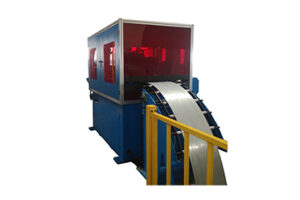
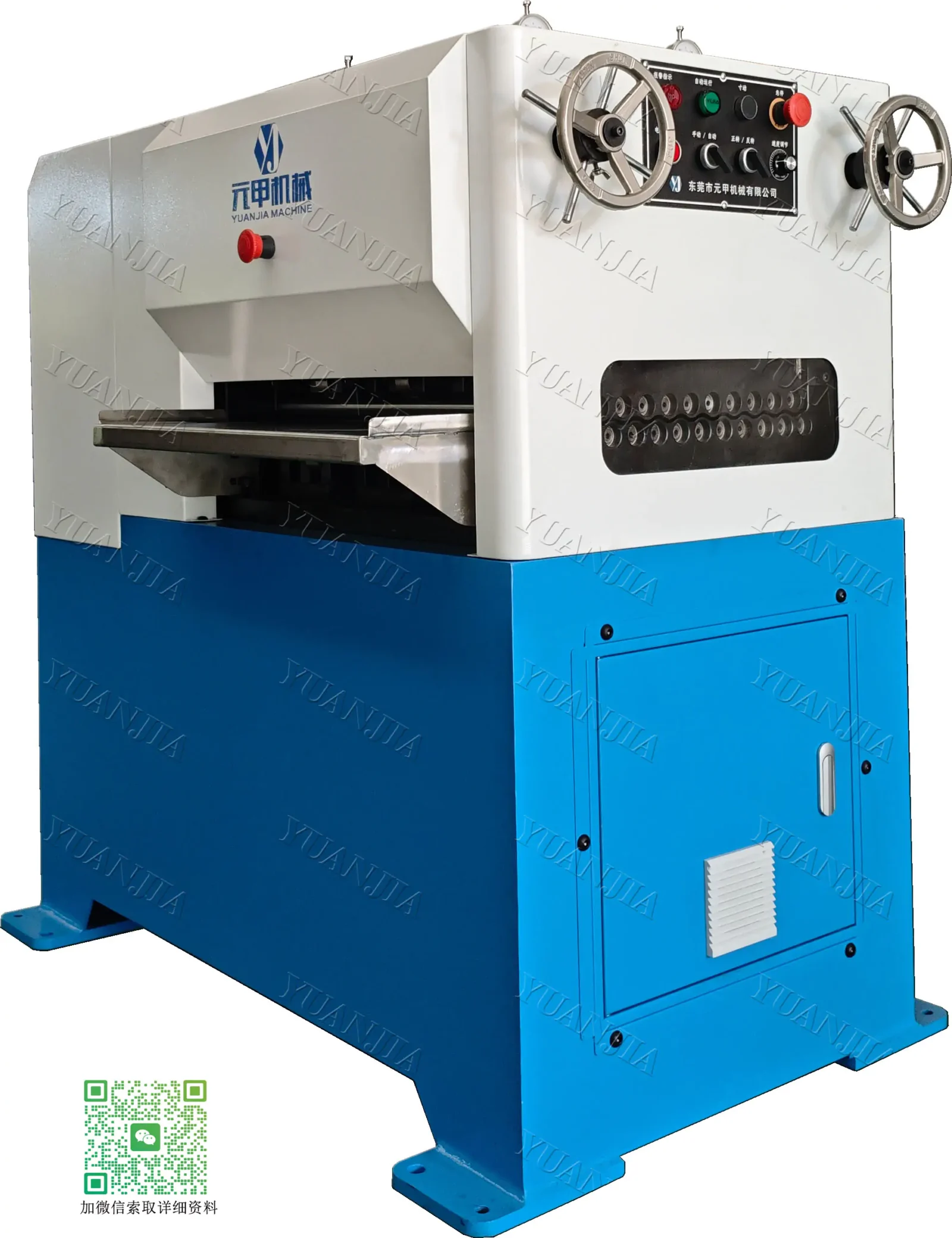
As global automotive OEMs accelerate their lightweighting initiatives, Advanced High-Strength Steel (AHSS) has transitioned from an alternative material to the dominant standard for safety-critical structural components. Cross beams, A/B pillars, anti-collision beams, and side-impact reinforcements are now routinely manufactured from material grades ranging from 800MPa dual-phase (DP) steel to 1500MPa press-hardened steel (PHS / 22MnB5). While these materials deliver exceptional strength-to-weight ratios, they introduce a manufacturing challenge that many stampers underestimate: AHSS coils retain significant internal stresses from the cold rolling and annealing processes, manifesting as edge waves, center buckles, longitudinal curl, and cross-bow. When these defects enter a stamping die without proper correction, they amplify under forming pressure, producing dimensional deviations of several millimeters, unacceptable surface quality, and in severe cases, complete part rejection. The Yuanjia 300-1300HSS Precision Leveling Machine is specifically engineered to address the AHSS flatness challenge. It achieves flatness control of ≤0.1mm per square meter and handles yield strengths up to 1500 MPa — covering the full range of AHSS and ultra-high-strength steel (UHSS) grades used in modern automotive platforms. The machine’s 21-roller three-stage precision straightening system is the technological heart of the solution. The process is divided into three functional zones: the front section employs

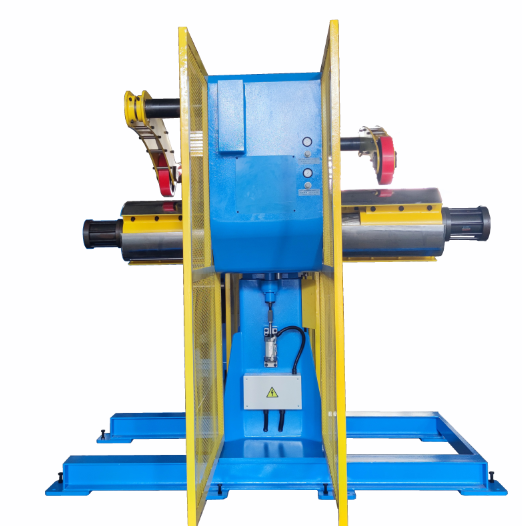
Double-head uncoiler, double-station alternate feeding, non-stop coil switching, automatic rotation, high efficiency continuous stamping line.

Automotive Cross Beam Production Line — Selecting a Double-Head Uncoiler

A typical automotive cross beam production line spans 50 to 60 meters, integrating decoiling, straightening, feeding, stamping, and roll-forming operations. In such extended-process layouts, the most devastating efficiency killer is rarely the cycle time of any individual machine — it is the coil change downtime. Conventional single-head uncoilers require operators to stop the entire line, thread out the remaining tail, hoist a new coil, clamp and expand it, feed the leading edge through the straightener, and re-establish tension before production can resume. This entire sequence consumes 15 to 30 minutes even for experienced operators. With 4 to 6 coil changes per day on a busy cross beam line, the cumulative non-production time reaches 1 to 3 hours every single day — a silent but substantial drain on capacity and revenue. The Yuanjia KHT Series Double-Head Uncoiler is purpose-built to eliminate this bottleneck entirely. Its core design philosophy centers on dual-station alternating feeding with zero-downtime coil switching. Each station features an independently driven spindle powered by a Siemens variable-frequency motor with a dedicated inverter. A hydraulic expansion mechanism accommodates coil inner diameters from 460mm to 530mm, with a maximum outer diameter of 1600mm. While one station is actively feeding material into

Release of a new generation of servo feeders to help upgrade the stamping automation industry

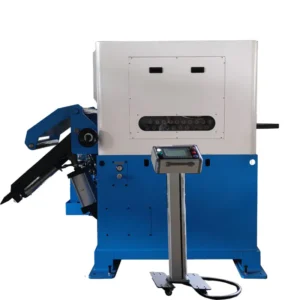
Continuing to innovate in the field of global stamping automation equipment, today officially released its new generation of servo feeder. This new equipment adopts more advanced servo control technology, has higher precision and efficiency, and provides a more competitive solution for the automation upgrade of stamping production lines. Since the launch of the first servo feeder in 2004, Yuanjia Machinery has been committed to providing efficient and precise automation equipment to customers around the world. The new generation of servo feeder adopts the latest 3D simulation technology and finite element analysis to optimize the structural design and significantly improve the stability and performance of the equipment. Whether in terms of improving production efficiency, reducing failure rates, or saving energy and reducing emissions, this equipment has brought huge economic benefits to customers. “Our goal is to continuously promote technological innovation and provide customers with customized automation equipment solutions.” The person in charge of Yuanjia Machinery said, “The new generation of servo feeders not only meets customers’ needs for high-precision and high-efficiency equipment, but also It provides a strong impetus for the upgrading of the entire stamping automation industry.

Stamping Automation Equipment Manufacturing Technology Innovation and Service Upgrade

It has been committed to the development, design and manufacturing of stamping automation equipment. Its main business projects include uncoilers, levelers, feeders and manipulators. As early as 2004, the company launched the servo feeder and servo leveling feeder three-in-one model, demonstrating its leading position in the industry. The company has a top design team who are proficient in using advanced computer software such as CATIA, SOLIDWORKS, PRO/E, etc. to perform 3D motion simulation and finite element analysis. With this technical advantage, combined with years of practical experience, it can effectively solve various problems in stamping automation production for customers. In addition, the company also insists on customizing personalized products according to customer needs, and strictly selects world-class brands in Europe and Japan for core components to better serve global customers and improve product quality and performance.

Personalized customized services lead the new trend of stamping automation equipment

In the field of stamping automation equipment manufacturing, with years of professional accumulation and continuous innovation, it has become a leading enterprise in the industry. The company’s main products include uncoilers, levelers, feeders, manipulators, etc., and in 2004, it took the lead in launching servo feeders and servo leveling feeders three-in-one models, making important contributions to the development of the industry. The core competitiveness lies in its strong design team and advanced technical means. By using CATIA, SOLIDWORKS, PRO/E and other software for 3D motion simulation and finite element analysis, it can accurately optimize product performance in the design stage. More importantly, the company is customer-oriented and provides personalized customization services to create exclusive stamping automation equipment according to the different production needs of each customer. In the selection of core components, we insist on strictly selecting world-class brands in Europe and Japan to ensure the high quality and stability of the equipment, so as to better serve global customers and help customers stand out in the fierce market competition.

Automatic Butt Welding Machine: A Key to Enhancing Automation of Roll Rolling Production Lines​

Roll rolling production lines are widely used in the manufacturing of automotive crossbeams, anti-collision beams, and logistics shelves. These production lines consist of multiple pieces of equipment such as uncoilers, levelers, feeders, punch presses, rolling mills, and shears. As a result, the production lines are extremely long, ranging from 20-30 meters in the short case to 50-60 meters in the long case.​Trying to bring a coil head to the end of the production line is an extremely labor-intensive task. At this point, we can choose the automatic butt welding machine we produce. We usually place it between the leveler and the feeder. It can automatically weld the heads and tails of two coils of materials together, thereby significantly reducing the manual material threading time, improving production efficiency, and greatly enhancing production safety.​For enterprises engaged in the production of automotive crossbeams, anti-collision beams, and logistics shelves, the length of the roll rolling production line has always been a challenge in the production process. The manual material threading work not only consumes a lot of labor but also affects the continuity of production. The emergence of the automatic butt welding machine has effectively solved this problem.​By automatically connecting the material heads and

Heavy plate 2-in-1 uncoiler straightener, heavy plate leveling machine, high strength plate straightener, auto parts stamping, hardware precision stamping

– Exploring the significance of leveling in ensuring product quality and structural integrity.

# Exploring the Significance of Leveling in Ensuring Product Quality and Structural Integrity In the industrial landscape, particularly within manufacturing sectors such as automotive, the quest for product quality and structural integrity is paramount. A critical process that plays a significant role in achieving these objectives is leveling. Leveling not only enhances the aesthetic appeal of products but also serves to ensure the dimensional accuracy and overall performance of materials used in various applications. In this article, we will delve into the significance of leveling, focusing on how modern leveling machines, like the YJML-H model, contribute to efficient unwinding, material handling, and customization while meeting production line requirements. ## Understanding Leveling in Industrial Production Leveling is the process of flattening materials—usually metal sheets or coils—to eliminate internal stresses and achieve uniform thickness. This is particularly crucial in industries where precision is non-negotiable, such as automotive manufacturing. A well-leveled material guarantees that components fit together seamlessly, which is essential for maintaining structural integrity. ### The Role of Leveling Machines Leveling machines are engineered to perform this vital task efficiently. Among them, the YJML-H model stands out due to its advanced features, including hydraulic servo feeders, pullers, and integration capabilities with fine

Heavy plate hydraulic servo feeder, 2-in-1 uncoiler straightener, auto parts precision stamping, fine blanking production line, hydraulic shear machine

**Servo Feeders vs. Traditional Feeders: Which is Right for Your Business?**

# Servo Feeders vs. Traditional Feeders: Which is Right for Your Business? In the highly competitive landscape of manufacturing, particularly in sectors such as automotive and heavy machinery, the efficiency and precision of production processes can make or break a business. Among the various elements that contribute to this efficiency is the feeder system used in the material processing phase. Companies often find themselves at a crossroads when deciding between traditional feeders and modern servo feeders. In this article, we will explore the differences between these two systems, examine the challenges associated with traditional equipment, and highlight the advantages of hydraulic servo feeders, particularly in thick material processing. ## Understanding the Basics: Traditional Feeders Traditional feeders have been the backbone of many manufacturing processes for decades. These mechanical devices work by using a series of belts, rollers, or other mechanisms to feed material into machines like hydraulic presses or fine blanking presses. While reliable, traditional feeders can face significant challenges, especially when it comes to handling thicker materials ranging from 4.0 to 10.0 mm. ### Challenges of Traditional Equipment 1. **Feeding Slippage**: One of the most common issues encountered with traditional feeders is feeding slippage. This occurs when the material

Heavy plate 2-in-1 uncoiler straightener, heavy plate leveling machine, high strength plate straightener, auto parts stamping, hardware precision stamping

– An introductory post explaining the components and functions of these machines.

# Understanding the Components and Functions of Advanced Leveling Machines in Industrial Production In the fast-paced realm of industrial production, efficiency and precision are paramount. Among the various equipment that aid in these goals, leveling machines, particularly those designed for heavy-duty applications, play a critical role. This article will delve into the components and functions of these machines, with a focus on their capabilities in material handling, customization, and core operations, highlighting innovations such as the YJML-H model. ## What is a Leveling Machine? A leveling machine is an advanced piece of equipment used primarily in the processing of metal sheets or coils. Its core function is to flatten and smooth out materials that may have been subjected to stresses during earlier manufacturing processes. This ensures uniform thickness and quality across the material, which is crucial for subsequent operations like cutting, stamping, or forming. ### Components of Leveling Machines 1. **Unwinding Unit**: – The unwinding unit is designed for efficient unwinding of coils. It typically includes a hydraulic system that manages the tension and speed at which the coil material is fed into the leveling machine. This component is crucial for maintaining the integrity of the material, especially when dealing

Heavy plate 2-in-1 uncoiler straightener, heavy plate leveling machine, high strength plate straightener, auto parts stamping, hardware precision stamping

**Understanding the Basics: What is a Thick Plate Uncoiler and Leveling System?**

# Understanding the Basics: What is a Thick Plate Uncoiler and Leveling System? In today’s fast-paced industrial landscape, efficient material handling is paramount to maintaining productivity and ensuring quality outputs. One of the critical components in metal processing and manufacturing is the thick plate uncoiler and leveling system. This two-in-one machine plays an essential role in unwinding coils of thick materials and leveling them for further processing. In this article, we will delve into the core functions of a thick plate uncoiler and leveling system, exploring its design flexibility, customization options, and relevance in various industrial applications, particularly in the automotive manufacturing industry. ## The Importance of Efficient Unwinding Efficient unwinding is vital in any production line that involves heavy materials. The uncoiling process must be executed with precision to prevent damage to the material and ensure seamless integration into subsequent processing stages. A thick plate uncoiler is specifically designed to handle large, heavy coils of metal, unwinding them in a controlled manner to maintain the integrity of the material properties. ### Core Functions of a Thick Plate Uncoiler The primary function of a thick plate uncoiler is to unwind coils of metal, which can vary significantly in size and