Dongguan Yuanjia Machinery Co, Ltd.

Nachrichten

NEWS

Sure! Here are several blog topic ideas centered around Precision Leveling Machine for AHSS Sheets:

# Precision Leveling Machines for AHSS Sheets: An Essential Tool in Modern Manufacturing In the fast-evolving landscape of manufacturing, particularly in the automotive industry, the demand for high-strength steel (HSS) continues to rise. Advanced High-Strength Steel (AHSS) has become a cornerstone material for automotive structures due to its superior strength-to-weight ratio, which contributes significantly to vehicle safety and efficiency. However, processing these materials presents unique challenges, necessitating specialized equipment like the Precision High-Strength Plate Leveling Machine. This blog explores various aspects of Precision Leveling Machines, their importance in working with AHSS sheets, and their role in maintaining compliance with industry standards such as IATF 16949. ## Understanding the Need for Precision Leveling High-strength steel components, including A/B pillars, crash beams, and safety components, must meet stringent flatness requirements to ensure optimal structural integrity and performance. The precision leveling process is critical to achieving this flatness control. Variations in flatness can lead to assembly issues and compromise the safety features of automotive designs. Precision leveling machines are specifically engineered to address the challenges posed by AHSS sheets, ensuring they maintain their structural properties while being processed. This precision not only enhances the aesthetic quality of the final product but also ensures
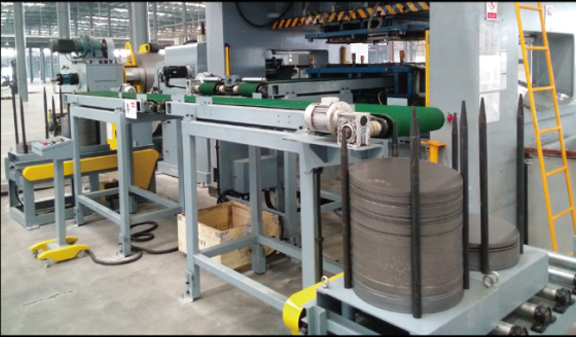
**Understanding Lift Stack: A Comprehensive Guide to Its Features and Benefits**

# Understanding Lift Stack: A Comprehensive Guide to Its Features and Benefits In an era where efficiency and precision are paramount in manufacturing and logistics, the concept of lift stacks has emerged as a vital component in material handling systems. Lift stacks, often referred to as stackers, are designed to optimize the storage and retrieval of goods while minimizing labor costs and maximizing space utilization. In this comprehensive guide, we will delve into the various features and benefits of lift stacks, exploring their customized products, design aspects, shape and size variations, material thickness, automatic blanking types, magnetic types, and their integration with robotics. ## What is a Lift Stack? Lift stacks are specialized equipment used in warehouses, distribution centers, and manufacturing plants to lift, stack, and transport materials efficiently. The lift stack can be manual or automated, catering to different operational needs. By allowing for the vertical stacking of products, lift stacks enable businesses to maximize storage space and streamline workflow processes. ## Customized Products Tailored to Specific Needs One of the most significant advantages of lift stacks is their ability to be customized to meet specific operational requirements. Manufacturers understand that each business has unique challenges and preferences when

**Understanding the Role of Precision Leveling Machines in AHSS Processing**

# Understanding the Role of Precision Leveling Machines in AHSS Processing As industries evolve, the demand for advanced materials that can offer both strength and weight savings has led to an increased focus on Advanced High-Strength Steel (AHSS) and its processing technologies. Among these technologies, precision leveling machines play a critical role in ensuring that high-strength plates meet the stringent requirements of modern manufacturing, particularly in the automotive sector. This article aims to delve into the significance of precision leveling machines, their specialized functions, and how they contribute to the production of high-quality components such as A/B pillars and crash beams. ## The Rise of Advanced High-Strength Steel (AHSS) Advanced High-Strength Steel (AHSS) is revolutionizing the automotive industry by providing manufacturers with materials that are lightweight yet possess exceptional strength. Hot-formed automotive steel, which is often utilized in producing structural components, is a prime example of AHSS. As vehicles become increasingly designed for safety, efficiency, and performance, the demand for ultra-high-strength steel continues to grow. However, the processing of AHSS presents specific challenges, primarily due to the material’s inherent properties. These materials often exhibit a tendency to warp or distort during manufacturing processes, necessitating advanced solutions to ensure flatness and

– Explore what Lift Stack is, how it works, and its advantages for businesses.

# Exploring Lift Stack: Revolutionizing Customization and Efficiency in Modern Business In today’s rapidly evolving business landscape, the demand for customized products has reached unprecedented heights. Companies are continually seeking innovative ways to enhance their production processes, improve efficiency, and maintain a competitive edge. One such innovation that has gained traction is the Lift Stack system. This article delves into what Lift Stack is, how it operates, and the myriad advantages it offers to businesses. ## What is Lift Stack? Lift Stack is an advanced modular system designed for the efficient handling and stacking of materials in various industrial applications. It is particularly well-suited for businesses that require customized solutions for their products, whether that involves specific dimensions, material thicknesses, or specialized shapes. The system seamlessly integrates with existing production lines and facilitates a range of automatic blanking types, magnetic types, and robotic applications. The core concept behind Lift Stack revolves around enhancing productivity while minimizing manual labor. By automating the stacking process, businesses can not only save time but also reduce the likelihood of human error, ensuring a higher level of precision in production. ## How Does Lift Stack Work? At its essence, the Lift Stack system employs a

– Explore how precision leveling machines enhance the quality of Advanced High-Strength Steel (AHSS) sheets.

# Explore How Precision Leveling Machines Enhance the Quality of Advanced High-Strength Steel (AHSS) Sheets In the rapidly evolving landscape of modern manufacturing, the demand for high-performance materials has surged, particularly in the automotive industry. With stringent safety standards and performance requirements, manufacturers are increasingly turning to Advanced High-Strength Steel (AHSS) for components ranging from A/B pillars to crash beams and other safety components. To meet these demanding specifications, precision leveling machines have emerged as an essential tool in ensuring the quality and integrity of AHSS sheets. This article delves into how precision high-strength plate leveling machines enhance the quality of AHSS sheets, focusing on their role within specialized leveling solutions and compliance with standards like IATF 16949. ## Understanding Advanced High-Strength Steel (AHSS) AHSS is a category of steel that offers superior tensile strength and ductility compared to conventional high-strength steel. It is engineered to withstand extreme conditions while maintaining formability, making it ideal for various automotive applications. The use of AHSS contributes to weight reduction, improved fuel efficiency, and enhanced safety in vehicles—essential factors in today’s competitive automotive market. ### Key Applications of AHSS 1. **A/B Pillars**: These structural elements play a critical role in vehicle safety by

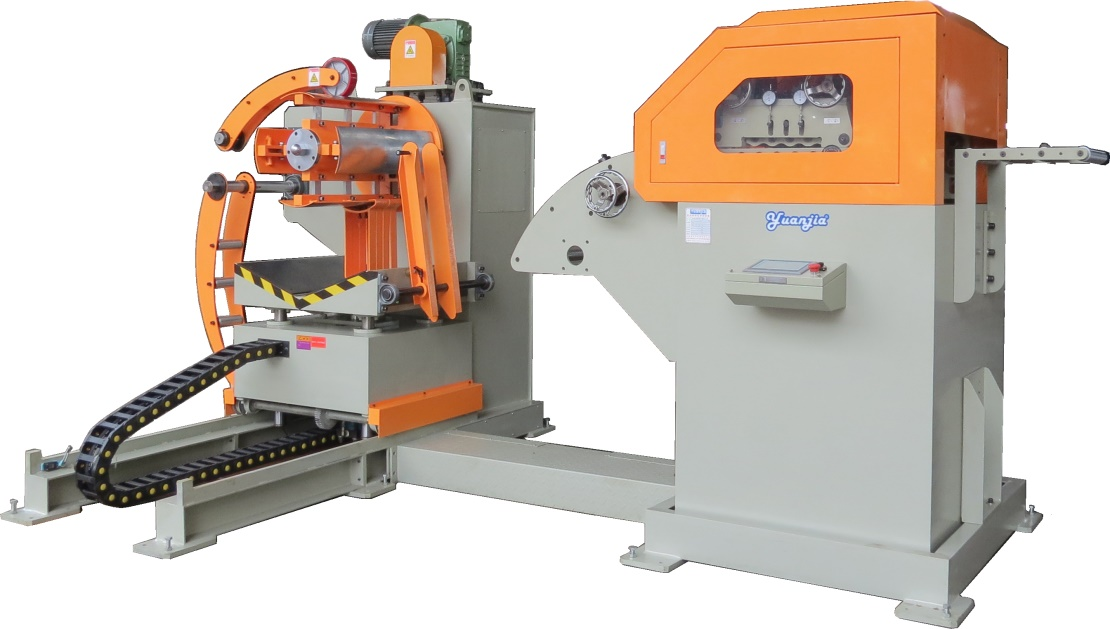
3-in-1 feeder is widely used in stamping production of 3C electronics, home appliances, motors, automobiles and various industrial hardware parts.

Here are some engaging blog topic ideas centered around the 3IN1 Servo Decoiler, Leveler, and Feeder System:

# Here are Some Engaging Blog Topic Ideas Centered Around the 3IN1 Servo Decoiler, Leveler, and Feeder System In today’s highly competitive manufacturing landscape, businesses continuously seek innovative solutions that enhance production efficiency and reduce operational costs. One such solution is the 3IN1 Servo Decoiler, Leveler, and Feeder System. This remarkable piece of machinery integrates decoiling, leveling, and feeding functions into a single unit, offering numerous technical advantages that can propel production lines forward. Below, we explore various engaging blog topic ideas centered around this sophisticated system. ## Understanding the Technical Advantages of the 3IN1 System ### 1. The Role of Siemens Servo Motors in Precision Manufacturing Siemens servo motors are renowned for their reliability and performance in industrial applications. When integrated into the 3IN1 Servo system, these motors deliver precise control over each function—decoiling, leveling, and feeding. A blog post focused on the advantages of using Siemens servo motors could delve into how they contribute to continuous feeding accuracy, rapid response times, and energy efficiency. Highlighting real-world examples of successful implementations can further engage readers, showcasing the tangible benefits of adopting this technology. ### 2. PLC Control Systems: The Brain Behind the Operation Programmable Logic Controllers (PLCs) serve as

Sicher! Hier sind einige Blog-Themenideen für Doppelkopf-Uncoiler:

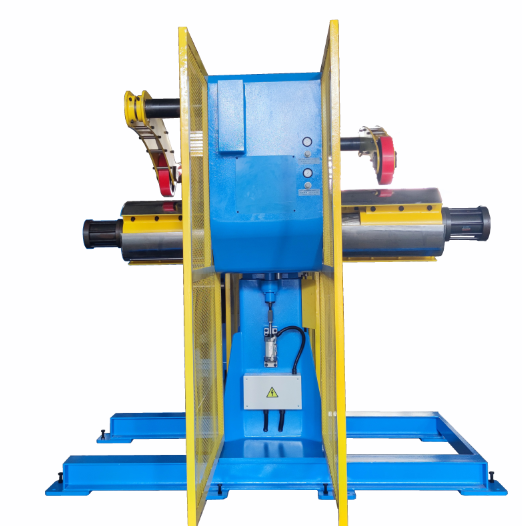
# Sure! Here are some blog topic ideas for Double-head Uncoiler In the world of manufacturing, operational efficiency and productivity are paramount. This is particularly true in industries that rely heavily on continuous feeding systems for materials such as steel coils, aluminum sheets, and other roll-formed products. One innovative solution that has emerged to meet the demands of high-volume production is the dual head uncoiler system. This blog article will explore the various facets and advantages of implementing a double-head uncoiler system, including its role in intelligent continuous feeding, stamping lines, roll forming lines, and more. ## Understanding the Dual Head Uncoiler System A dual head uncoiler system is designed to handle two coils simultaneously, allowing for seamless transitions during the production process. This capability is critical in industries where downtime must be minimized to maximize output. The system’s architecture typically includes two independent uncoiling stations that can operate alternately, providing a continuous flow of material without interruption. By utilizing a dual-station alternating feeding mode, manufacturers can achieve zero downtime for coil switching, which is essential for maintaining a steady production line. ### The Importance of Intelligent Continuous Feeding Intelligent continuous feeding refers to the automated process of delivering materials

3-in-1 feeder is widely used in stamping production of 3C electronics, home appliances, motors, automobiles and various industrial hardware parts.

**Das 3IN1 Servo-Abwickel-, Richt- und Zuführsystem verstehen: Ein umfassender Überblick**

# Das 3IN1-Servo-Abwickel-, Richt- und Zuführsystem verstehen: Ein umfassender Überblick In der heutigen Industrielandschaft sind Effizienz und Präzision von größter Bedeutung. Da Unternehmen bestrebt sind, ihre Produktionsprozesse zu rationalisieren, ist die Integration fortschrittlicher Technologien eine Notwendigkeit. Eine solche Innovation ist das 3IN1-Servoabroll-, Richt- und Zuführsystem, das drei wichtige Funktionen in einer einzigen, zusammenhängenden Einheit vereint. In diesem Blog soll ein umfassender Überblick über dieses System gegeben werden, wobei der Schwerpunkt auf den technischen Vorteilen, den strukturellen Innovationen und den allgemeinen Auswirkungen auf die Produktionseffizienz liegt. ## Die Grundlagen: Was ist ein 3IN1-Servo-Abwickel-, Richt- und Zuführsystem? Im Kern ist das 3IN1-System darauf ausgelegt, Materialien durch Abwickeln, Richten und Zuführen in die nachfolgenden Verarbeitungsstufen effizient zu handhaben. Durch diesen integrierten Ansatz wird nicht nur der Bedarf an mehreren Maschinen minimiert, sondern auch der Produktionsfluss verbessert, was es zu einer wichtigen Komponente in automatisierten Produktionslinien macht. ### Abwickelfunktionalität Die Abwickelfunktion ist für das Abwickeln von aufgewickeltem Material, typischerweise Metallbändern, verantwortlich, bevor diese weiterverarbeitet werden. Die Effizienz dieses Prozesses ist entscheidend, da jede Verzögerung zu Engpässen in der Produktion führen kann. - **Technische Vorteile**: Durch den Einsatz von Siemens-Servomotoren gewährleistet das System eine hohe Präzision und Zuverlässigkeit beim Abwickeln. Die Servo

**Die Doppelkopf-Abwickelhaspel verstehen: Ein umfassender Leitfaden**

# Understanding the Double-head Uncoiler: A Comprehensive Guide In the ever-evolving landscape of manufacturing, efficiency and productivity remain at the forefront of operational goals. One significant innovation that has emerged to address these needs is the double-head uncoiler system. This sophisticated apparatus plays a pivotal role in various production lines, particularly in stamping and roll forming applications. In this comprehensive guide, we will explore the functionality, advantages, and core components of the double-head uncoiler, as well as its impact on overall production efficiency. ## What is a Double-head Uncoiler? A double-head uncoiler, often referred to as a dual uncoiler system, is an advanced material handling solution designed to facilitate the continuous feeding of coils into production lines. Unlike traditional single uncoilers, which can lead to downtime during coil changeovers, the double-head uncoiler allows for seamless operation and minimal interruptions. By integrating intelligent continuous feeding capabilities, manufacturers can achieve efficient production rates while maintaining high-quality output. ### Core Process Value of Double-head Uncoilers The primary value proposition of a double-head uncoiler lies in its ability to optimize the production process. By supporting dual-station alternating feeding modes, manufacturers can switch between coils without halting operations. This innovative technical architecture not only enhances

**Die Vorteile des Einsatzes einer Doppelkopf-Abwickelhaspel in der Metallverarbeitung**

# The Advantages of Using a Double-head Uncoiler in Metal Processing In the world of metal processing, efficiency and productivity are paramount. As industries seek to optimize their operations, innovative technologies increasingly play a critical role in achieving these goals. Among the advancements that have garnered attention is the **double-head uncoiler**, a device that promises to revolutionize the way metal coils are handled during manufacturing processes. In this article, we will explore the various advantages of employing a double-head uncoiler, particularly in stamping lines and roll forming lines, while highlighting its contributions to intelligent continuous feeding, zero downtime, and overall efficiency improvement. ### Understanding the Dual Uncoiler System The **dual uncoiler system** integrates two uncoiling heads into one setup, allowing for simultaneous operation. This design significantly enhances the feeding process of metal coils into various machinery used in production. Unlike traditional single-head uncoilers, which require manual intervention to switch coils, the double-head configuration enables an automatic, seamless transition between coils, thus minimizing interruptions and maintaining continuous production flow. ### Intelligent Continuous Feeding In metal processing, especially in high-volume manufacturing environments, the need for **intelligent continuous feeding** becomes increasingly critical. The double-head uncoiler supports this requirement by offering a dual-station alternating